
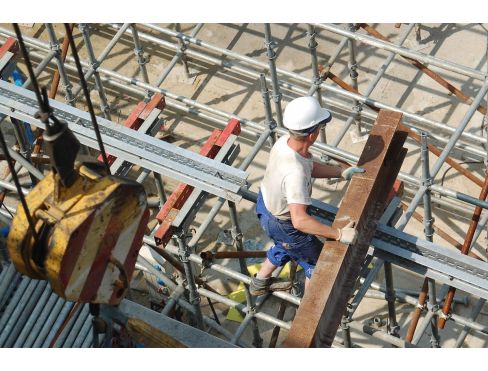
If you're planning roofing work, external painting, solar panel installation, property maintenance or a larger construction project, you’ll be keen to ensure the process is conducted as swiftly and efficiently as possible. If you are erecting scaffolding yourself, or simply have a busy schedule to work around, the length of time it takes to put up scaffolding will be an important factor in your planning.
That’s why the team at TopTower have compiled all the information you need to pencil scheduled work into your diary.
Typical scaffolding installation times
The time it takes to erect scaffolding will depend on the type of scaffolding required for the project and the size of the building.
However, as a general guide:
|
Project Type |
Typical Erection Time |
|
Small access tower |
Up to 2 hours |
|
Single storey property |
2-4 hours |
|
Standard two storey house |
3-6 hours |
|
Detached or larger domestic properties |
1 day |
|
Multistorey commercial building |
1-3 days |
|
Complex industrial scaffolding |
2+ days |
These are estimates rather than guarantees. Professional scaffolders assess every project individually before providing realistic timescales.
Does the type of scaffold make a difference?
Not every scaffold takes the same amount of time to erect. Mobile scaffold towers can often be assembled very quickly by trained users following the manufacturer's instructions, whereas larger tube and fitting scaffolds require significantly more labour and planning.
For example:
|
Scaffold Type |
Typical Complexity |
|
Mobile scaffold tower |
Low |
|
Independent scaffold |
Moderate |
|
Birdcage scaffold |
Moderate |
|
Temporary roof scaffold |
High |
|
Cantilever scaffold |
High |
|
Suspended scaffold |
Specialist |
Which factors influence the time of installation?
Professional scaffold companies will usually complete a site assessment before installation. This planning stage allows scaffolders to identify any challenges before arriving on the day, reducing delays during installation and ensuring the scaffold is designed appropriately for the work being undertaken.
For more complex projects, scaffold designs may also need to be produced by a qualified designer before erection begins.
During the initial visit they'll consider:
The height required
The size of the structure
Ground conditions
Nearby buildings
Overhead cables
Pedestrian access
Vehicle access
Public highways
Whether additional licences or permits are required
How long does it take for scaffolding to arrive?
Another common question is how quickly scaffolding can be installed after making an enquiry.
The answer depends on several factors:
Contractor availability
Time of year
Project size
Whether specialist equipment is required
Local authority permits (if needed)
Smaller domestic projects can often be scheduled within a few days, while larger commercial projects may require significantly longer planning periods.
If scaffolding needs to be erected on a public pavement or highway, licences must usually be obtained from the relevant local authority before work can begin, which may extend lead times.
For this reason, it's always advisable to arrange scaffolding well before your builders, roofers or decorators are due to start.
What happens on installation day?
Once the scaffold team arrives, the process follows a structured sequence designed to prioritise safety.
Rather than assembling the structure randomly, scaffolders build progressively from the ground upwards, ensuring every component contributes to the stability of the finished scaffold.
Typical stages include:
Unloading materials
Preparing the ground
Positioning base plates or sole boards
Erecting standards and ledgers
Fitting transoms and scaffold boards
Installing guardrails
Adding toe boards
Securing ties where required
Carrying out final safety inspections
How many scaffolders are needed?
The size of the scaffolding team has a direct impact on installation times.
Most domestic projects are completed by two to four experienced scaffolders, while larger commercial contracts may require significantly bigger teams working simultaneously across different elevations.
A larger crew allows work to be completed more efficiently while maintaining safe lifting practices and correct assembly procedures.
Regardless of team size, scaffolding should always be erected by competent people following recognised safe systems of work.
Common causes of delay in scaffolding erection
While experienced scaffolders work efficiently, several factors can add unexpected time to an installation.
Difficult site access: Properties with narrow driveways, rear gardens, terraces or restricted access often require materials to be carried manually over longer distances.
Uneven ground: Sloping gardens or unstable surfaces require additional preparation before work can begin safely.
Weather conditions: Although scaffolders work outdoors throughout the year, high winds, heavy rain and icy conditions may make erection unsafe or impractical.
Complex scaffold designs: Temporary roofs, chimney scaffolds, cantilever scaffolds and bespoke commercial structures naturally take longer than straightforward domestic access scaffolds.
Changes to the original scope: If additional work is requested after installation has begun, the scaffold may need redesigning or extending, increasing the overall programme.
How long can scaffolding stay up?
There is no fixed legal time limit. Scaffolding remains erected for as long as it is required, provided it continues to be safe and is inspected appropriately. Throughout this period, regular inspections are essential. These inspections help ensure the scaffold remains safe throughout the duration of the project.
UK guidance requires scaffolding to be inspected:
Before first use
Every seven days
After significant alterations
Following severe weather
Choosing the right access team and equipment
Although everyone wants work to begin quickly, speed should never come before safety.
Professional scaffolders follow recognised erection methods that prioritise collective fall protection throughout the build process. Tower scaffolds, for example, should be erected using approved methods such as the 3T (Through the Trapdoor) or Advance Guardrail system in accordance with manufacturer instructions.
Taking an extra hour to install guardrails correctly or secure additional ties is far preferable to creating unnecessary risks for workers.
At TopTower, we understand that efficient access solutions are essential to keeping projects moving safely. Whether you're looking for mobile scaffold towers, 3T scaffold towers, podiums, warehouse access equipment or professional work at height solutions, our range is designed to help you work safely and efficiently.


